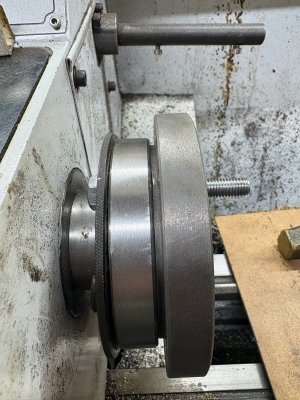
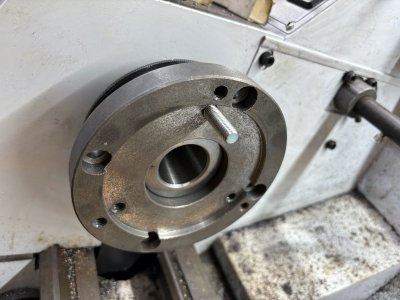
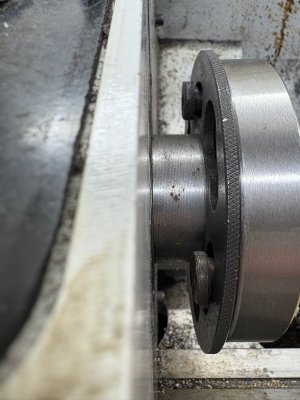
Now to reassemble the tailstock...this can't be hard, right? And it wouldn't be if I had room to slide it on from the end of the bed. Or if I had three to four really small hands.
😉
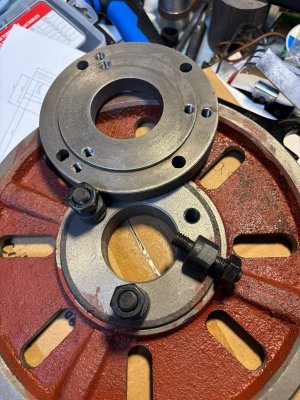
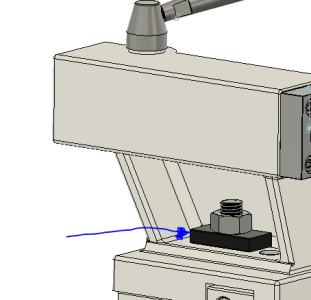
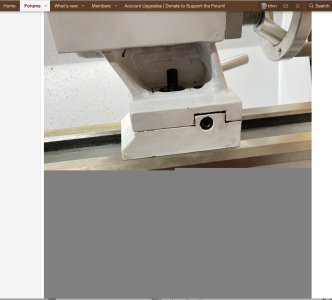
The clamping block needs to be held up against the bottom of the bed so there is room to start the nut underneath. However, I need to push down on the threaded stud from above because the spring is causing it to lift. Eventually I found that an extra long bolt in my machinist's jack under the clamping block would hold it up while leaving my hands free to get the nut started.
View attachment 42747
Note that there is a groove or slot cast into the underside of the clamping block. This captures the nut to prevent it from backing off after you get it set. The quick-lock lever is adjusted by this underside nut--a 1/6 turn of the nut is the difference between the lock working decently or being uselessly loose.
A digression about the nut on the top side. It has nothing to do with the quick-lock lever. If you only ever used the quick lock, you could leave it off entirely. If you wrench it down tight, then the tailstock will be locked and the quick-lock lever will do nothing. Seems like a weird design but that's the way it is. All I can think is that the quick-lock lever uses an eccentric shaft to provide the locking force. This shaft is not all that thick and it is possible that it could get bent due to ham-handed operation or even just over repeated use. The top side lock nut would allow the tailstock to be locked in the event that the quick-lock is destroyed. The top side nut probably also locks the tailstock more securely than the quick-lock lever is capable of. Why that would be necessary in normal use escapes me.
(Cont.)