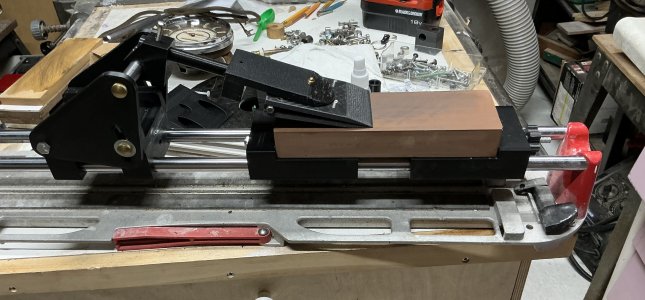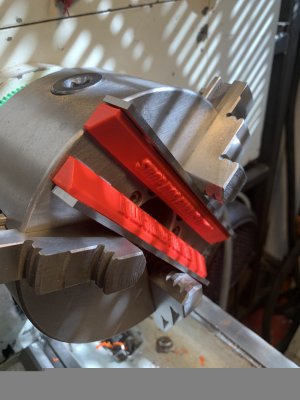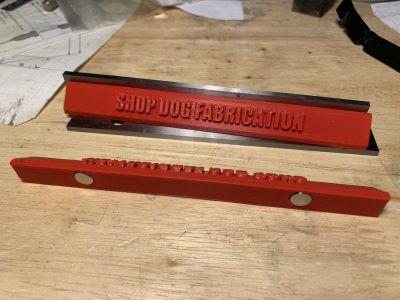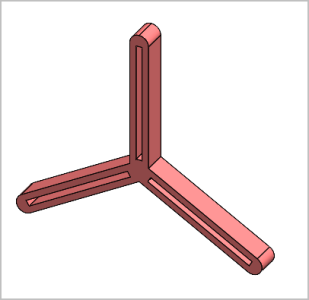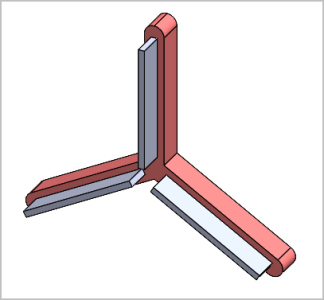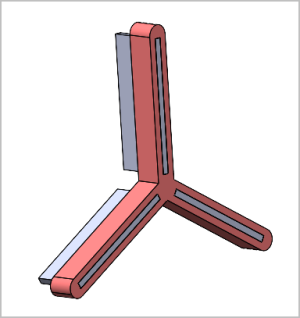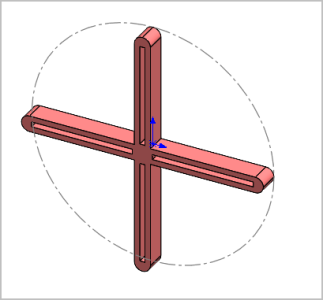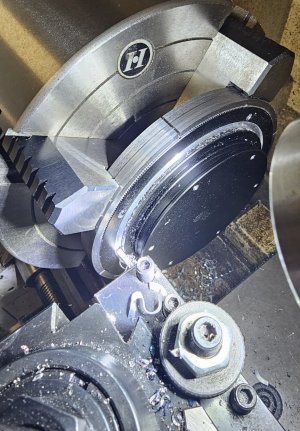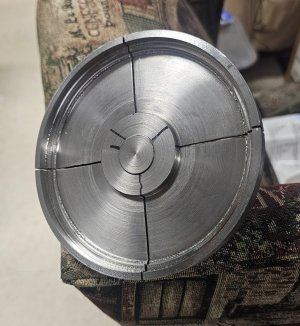
I'm thinking of making a 3DP variant of this. The arms will have close ended slots to receive the parallel bars. Friction fit but semi floating in the slot. Therefore no need for set screws because the part will press the parallels against the chuck face. I cant find (cheap) mini parallel sets in say 3" length & I'd have to buy 2 sets to get 3 of theoretically the same. But actually for what I'm using it for, milling my own parallels would be sufficiently accurate. TBC.
View attachment 85837View attachment 85839
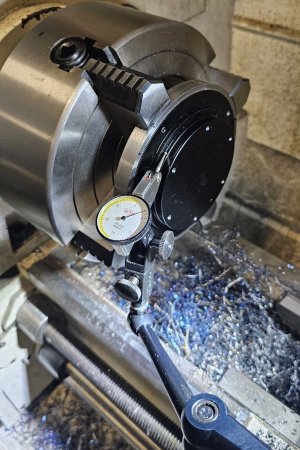
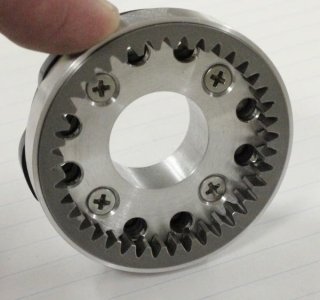
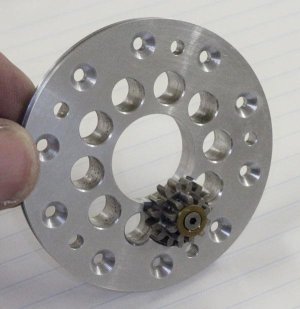
ps - IMHO dont but these, also by Edge. They are not accurate & the magnet installation is poor. And I hate magnets around swarf.
View attachment 85838

I'm thinking of making a 3DP variant of this
this parallel holder lets you use 2 parallels in your lathe so you don't need 3,
2 would be great because we could use existing set of pairs. But dumb question - what stops the holder + steel parallel from sliding out? Its kind of centered so low imbalance, but things happen.
I thought about sacrificing a cheapo 6" set & cutting them in half so you have 3 plus a spare. They are hardened but a disc grinder would get through it. Not sure about heat warpage though.
Forgot to say I was never counting on the 3DP for parallel stop accuracy either, hopefully my new pics show this. They are just a snug carrier for the insertable parallel which sits flush on the chuck face & back face of the part.he accuracy comes from your ground parallels not from the printed plastic.
Well, I think that is a concern you're right Peter. I've used them a couple of times and I took the parallels out after I chucked up the stock - they were loose. I'll have to try that again and gently tap the stock in after tightening and see what happens. I added a warning to the printables page - I can't think of a simple solution to keep the parallels captive and the holders captive - so taking them out after tightening the chuck and before you start the lathe seems sensible. Do that folks.2 would be great because we could use existing set of pairs. But dumb question - what stops the holder + steel parallel from sliding out? Its kind of centered so low imbalance, but things happen.
I thought about sacrificing a cheapo 6" set & cutting them in half so you have 3 plus a spare. They are hardened but a disc grinder would get through it. Not sure about heat warpage though.
But dumb question - what stops the holder + steel parallel from sliding out? Its kind of centered so low imbalance, but things happen.
I've used them a couple of times and I took the parallels out after I chucked up the stock - they were loose.
What the stops are intended for, or at least how I use them, is allowing consistent grip of relatively thin parts, especially when thin is combined with larger diameter. Picture a ring 0.2" thick x 1.5" diameter & you have to machine the end. You pick the parallel width that gives you maximum jaw contact but allows just enough stickout to machine the end. So you press the part with machined surface on the parallels while closing the jaws. The part is now perpendicular to spindle axis. Without the stop its very easy to get it cocked a couple thou. The extending surface to be machined is often not suitable or reliable to indicate off which is usually why it needs to be machined in the first place. The stops also make for consistent repeatability if you have multiple parts to make, your DRO measurements are still relevent. It alse acts as a physical constraint to infeed direction turning, very important when the grip contact area is low.Also, I don't think tapping the work with a hammer is as effective as it is on a milling vise. If that level of precision is required, then I use a collet chuck or a dialed in system.
To be honest about it, all we really want here is a better easier faster truer more convenient setup than can be done by eye. In most cases, the OD is still gunna need a skim cut to true it up. If that isn't the case, then the whole concept was prolly overkill. Which is ok I guess as long as we are not fooling ourselves into thinking it's better than that.
What the stops are intended for, or at least how I use them, is allowing consistent grip of relatively thin parts, especially when thin is combined with larger diameter.
You are worried about a thou? I don't think parallels will do that for you when used in a lathe chuck. It's too finicky.
What if the part is 3,4,5" diameter, do you have collets like that?


What if the part is 3,4,5" diameter, do you have collets like that?