
-
Scam Alert. Members are reminded to NOT send money to buy anything. Don't buy things remote and have it shipped - go get it yourself, pay in person, and take your equipment with you. Scammers have burned people on this forum. Urgency, secrecy, excuses, selling for friend, newish members, FUD, are RED FLAGS. A video conference call is not adequate assurance. Face to face interactions are required. Please report suspicions to the forum admins. Stay Safe - anyone can get scammed.
You are using an out of date browser. It may not display this or other websites correctly.
You should upgrade or use an alternative browser.
You should upgrade or use an alternative browser.
JCDammeyer's 42 projects
- Thread starter jcdammeyer
- Start date


Nope. Gingery Gas Fired but with microprocessor controller for variable fan speed and spark plug ignition. Used to be propane but now nat gas.Beer keg?
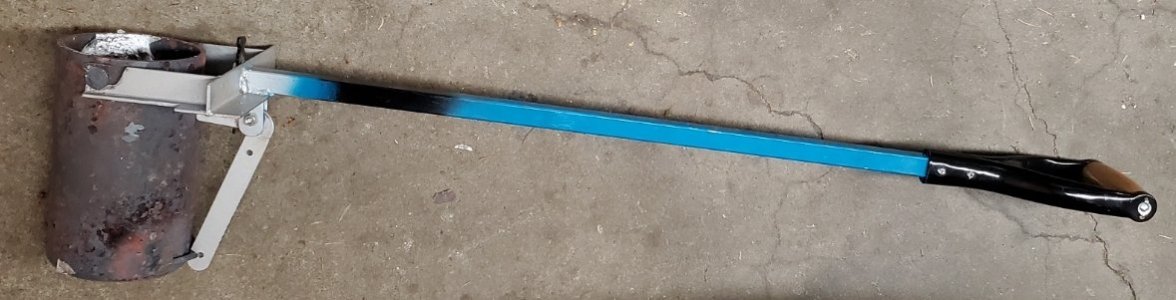
BTW, the Pipe Crucible and holder weighs in about 17 lbs. Add in 8 lbs of metal and it's a heavy lift when it's full of 750 degree C metal.I don't why but I've had this fear of melting metal over the last 4 years or so. The last pieces I cast were the frame for the Pneumatic Power Draw Bar that worked but not the way I wanted. I then made new patterns but never cast them And an even older pattern for the harmonic drive 4th axis. And patterns for the newest distraction to avoid other projects; the AR3 robot arm.
Anyway, even though it was about 24C outside with not much breeze I finally bit the bullet and set up to make ingots from Hyundai intake manifold and other sawn up bits.
View attachment 84502
Because the pieces are large I used the pipe crucible that can hold 12 lbs of aluminum. About half full for each set of ingots. All told the end result was 10 lbs of ingots.
View attachment 84503
By then I was puffing and really out of breath. And bending over a hot cruicible to fish out the left over steel bits from the castings. A lot of dross on top too, some of which might have been good metal but to make the ingots I didn't bother with degassing. Not even sure what sort of flux I might use and if it would separate some of the dross.
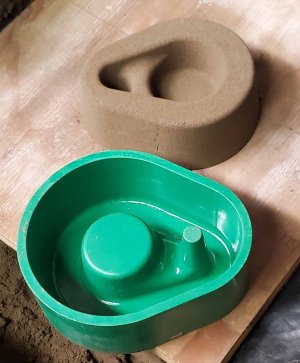
Thought I'd test out pattern for the pouring basin. Still have to make a smaller tapered sprue form but the basin looks good. Hopefully less porosity in the castings.

Hey John, ever use steel ‘chills’ to help cooling thick cross-sections of a casting ?Thought I'd test out pattern for the pouring basin. Still have to make a smaller tapered sprue form but the basin looks good. Hopefully less porosity in the castings.
View attachment 84555
We used a number of them when we were casting moulds for corrugated pipe.
Not sure I've done anything thick enough that needs that. Got any interesting links on that sort of process?Hey John, ever use steel ‘chills’ to help cooling thick cross-sections of a casting ?
We used a number of them when we were casting moulds for corrugated pipe.
Here is a NA company with Asian Production facilities that explains the use of ‘chills’.

 alignmfg.co
Cooling and Solidification: A Delicate Transition
Learn how to control cooling rates to produce high-quality castings with optimal properties. Understand the factors influencing solidification and prevent defects.
alignmfg.co
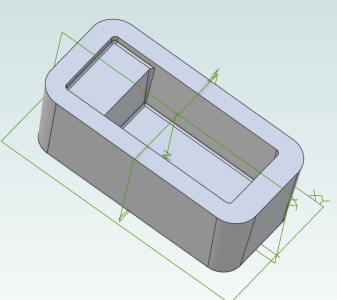
Interesting. Haven't read through all of it yet but does beg the question. This is a pattern for a small box for the AR3 robot arm. The edges and the bottom are all the same thickness but there's the step at one end.Here is a NA company with Asian Production facilities that explains the use of ‘chills’.
Cooling and Solidification: A Delicate Transition
Learn how to control cooling rates to produce high-quality castings with optimal properties. Understand the factors influencing solidification and prevent defects.
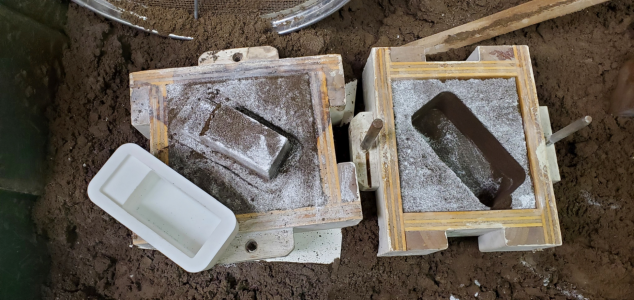
This has lots of things wrong here but it was really a trial. The cope/drag are too small. The sand is too wet. Added too much water to the sand. Used too much parting dust.
Anyway, the idea here is to put a riser above the shelf part. This is the thickest part of the casting and would likely shrink down. That would be the back of the box and of no consequence but with the idea of not having shrinkage at all seems like the riser there and feed from the opposite end.
Or would a chill be a better idea?
The feeder riser should be right where you are planning, above the ‘step’.Interesting. Haven't read through all of it yet but does beg the question. This is a pattern for a small box for the AR3 robot arm. The edges and the bottom are all the same thickness but there's the step at one end.
View attachment 84569
This has lots of things wrong here but it was really a trial. The cope/drag are too small. The sand is too wet. Added too much water to the sand. Used too much parting dust.
Anyway, the idea here is to put a riser above the shelf part. This is the thickest part of the casting and would likely shrink down. That would be the back of the box and of no consequence but with the idea of not having shrinkage at all seems like the riser there and feed from the opposite end.
Or would a chill be a better idea?
View attachment 84570
As for the CHILL, I would make the entire end of the FORM a machined ‘negative’ of Mild Steel.
It would act as a HEAT SINK when you have poured the molten metal.
You have to keep in mind that my knowledge of casting is of LARGE aluminum mould blocks which were 18” wide x 36” deep x 64” high. (We used them to produce 44” diameter corrugated HDPE pipe)
These are the largest (in mass) that I have cast. Required the 12 lb pipe crucible as opposed to the 6 lb. Most everything I've done is under 6 lbs.The feeder riser should be right where you are planning, above the ‘step’.
As for the CHILL, I would make the entire end of the FORM a machined ‘negative’ of Mild Steel.
It would act as a HEAT SINK when you have poured the molten metal.
You have to keep in mind that my knowledge of casting is of LARGE aluminum mould blocks which were 18” wide x 36” deep x 64” high. (We used them to produce 44” diameter corrugated HDPE pipe)
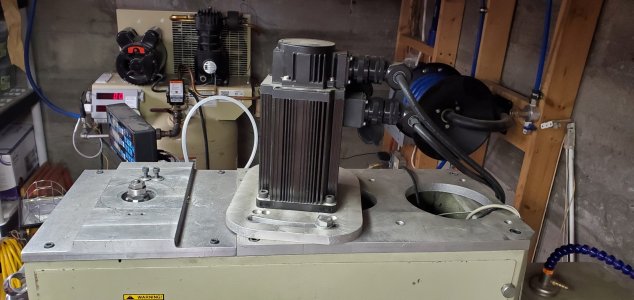
Chills help to remove ‘heat’ from sections that are thicker than the adjacent sections.These are the largest (in mass) that I have cast. Required the 12 lb pipe crucible as opposed to the 6 lb. Most everything I've done is under 6 lbs.
View attachment 84623
The ‘step’ in your rectangular casting (Monday 9:20 PM post) is a perfect example of a ‘pour section’ that would retain a larger quantity of thermal energy. The larger volume of metal in the step would require the ‘additional cooling’ that a ‘chill’ would provide.
Beautiful French Beach on the west side of Vancouver Island.
Here for a wedding.
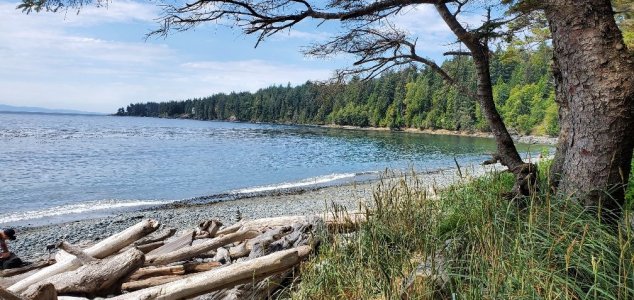
Here for a wedding.
Glad to see that it is beautiful out there on the Island!Beautiful French Beach on the west side of Vancouver Island.
Here for a wedding.
View attachment 85821
Enjoy! Hope you are with friends and loved ones!
I walked past that tree every weekday morning for almost a year 25 years ago. Beautiful spotBeautiful French Beach on the west side of Vancouver Island.
Here for a wedding.
View attachment 85821
Yahoo. We expected up to 3 days to have our UK ETA documentation processed. Instead it took longer to use the app and photograph the passports (and ourselves). Payment confirmation and UK ETA confirmation arrived pretty well right after each other.
Now to figure out where else in Ireland we're going to stay and how much of Northern Wales to visit. We've already booked a week in London. Already seen the museum with the big steam engine.
Now to figure out where else in Ireland we're going to stay and how much of Northern Wales to visit. We've already booked a week in London. Already seen the museum with the big steam engine.
Now if I had one of these maybe I'd sail to Ireland. The boat is available in North Saanich but outside my budget and likely Linda would be claustrophobic even in this.
Ah well. At least I have a full set of plans to build one even if I never do.
Ah well. At least I have a full set of plans to build one even if I never do.
Could you leave the plans with David ? He could have it finished in time for when you get back.Now if I had one of these maybe I'd sail to Ireland. The boat is available in North Saanich but outside my budget and likely Linda would be claustrophobic even in this.
Ah well. At least I have a full set of plans to build one even if I never do.
Now you have to realize that David has a smaller sailboat to chew up some of his time. So although he has all the wood working tools he's got so many other projects...Could you leave the plans with David ? He could have it finished in time for when you get back.

Oh my that is beautiful!!!Now if I had one of these maybe I'd sail to Ireland. The boat is available in North Saanich but outside my budget and likely Linda would be claustrophobic even in this.
Ah well. At least I have a full set of plans to build one even if I never do.