• Scam Alert. Members are reminded to NOT send money to buy anything. Don't buy things remote and have it shipped - go get it yourself, pay in person, and take your equipment with you. Scammers have burned people on this forum. Urgency, secrecy, excuses, selling for friend, newish members, FUD, are RED FLAGS. A video conference call is not adequate assurance. Face to face interactions are required. Please report suspicions to the forum admins. Stay Safe - anyone can get scammed.
  • The 2026 Calgary Area Meetup is set for Saturday May 30th at 10am. The signup thread is here! Robinhood has graciously offered to host the meetup again this year. Please note that you MUST RSVP to the notice linked above if you wish to come.

Working on my South Bend 9C

I see. I thought you single pointed them.

I think at least one of the members there has a surface grinder and could get rid of the shoulders on both sides. Then you can use the normal start side to cut the thread and then flip the die to cut a complete thread right to the shoulder.

Alternatively cut the thread relief afterward. It is kind of contrary to the purpose but it would improve the cap fit and nobody would ever know.
I'm hoping to graduate to single point in time, but that'll be a while.

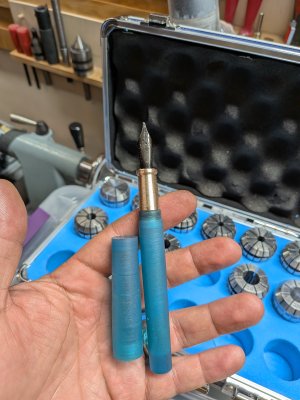
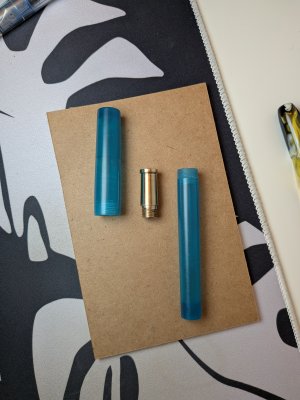
I did cut the relief after the threads actually. I usually chamfer the mating surface a bit as well. Will grab a photo showing the assembly pieces later.

Grinding down the die is an excellent idea!
 
I'm hoping to graduate to single point in time, but that'll be a while.
I suggest sooner rather than later. The reason I say that is there seems to be a shroud of black magic that only gets stronger with time which is a shame because single pointing threads really defines the "screw cutting engine lathe" . It's much easier than you might think, I mean, I can do it and am a lifter of heavy things....... 🙄 😛
 
I suggest sooner rather than later. The reason I say that is there seems to be a shroud of black magic that only gets stronger with time which is a shame because single pointing threads really defines the "screw cutting engine lathe" . It's much easier than you might think, I mean, I can do it and am a lifter of heavy things....... 🙄 😛
My main hesitation is that the threads I currently work with are "complicated" (metric and multi start). But doesn't mean I shouldn't learn the basics!
 
I suggest sooner rather than later. The reason I say that is there seems to be a shroud of black magic that only gets stronger with time which is a shame because single pointing threads really defines the "screw cutting engine lathe" . It's much easier than you might think, I mean, I can do it and am a lifter of heavy things....... 🙄 😛
While this wouldn't matter on this piece- dies can wander on longer stock, whereas if you hold the loose end in a rest, single pointing threads will be more uniform. I'm sure you knew that just throwing it out there 🙄
 
Hi Michael,

You can use a lathe handle to turn the chuck whilst threading. I occasionally use my lathe handle for threading fine 40+ tpi threads. Also useful for internal threading, particularly when you cannot see inside the bore.

21022015-01.JPG

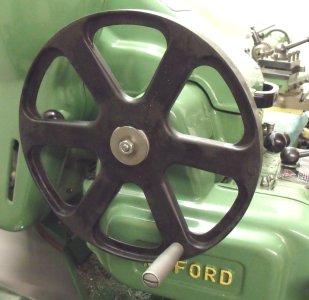
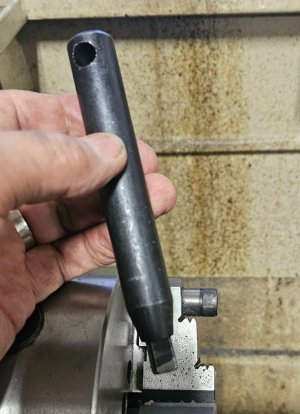
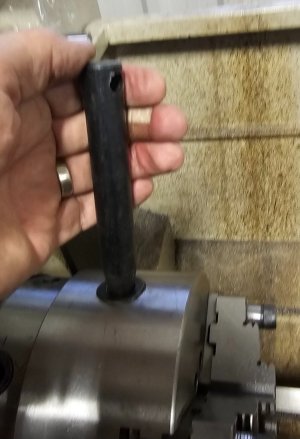
This is my lathe handle made using an old washing machine plastic pulley. I put a handle on the rim to give me better control, but you do have to be careful not to start the spindle whilst its in place.

21022015-05.JPG

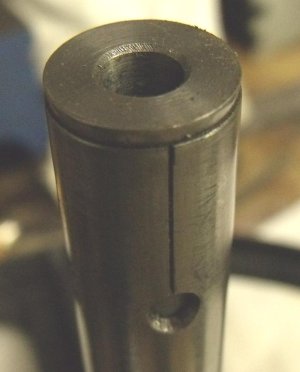
This is a picture of the end of the shaft that secures the handle in the spindle bore. It is a simple expanding collet, expanded by a tapered wedge pulled by a screw. The nut seen on the winding wheel is used to nip the expanding collet into the spindle bore.
 
Clever addition!

I made one too. I used it at first and then discovered that I get much better control just using a chuck key without the T. The backside crank got converted into a different tool.

20251218_132456.jpg

20251218_132510.jpg

You can easily turn the chuck with your face buried right up close and personal to the threading process. You can't easily do that with a backside crank.
 
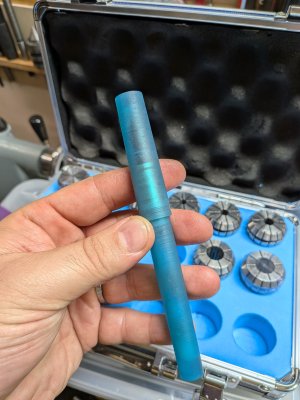
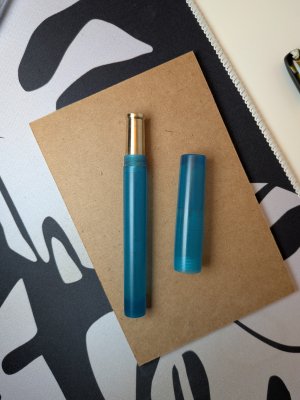
The brass section turned out well for a first try. Needed a slightly different taper but it's fine for a prototype. Cap and body externals also came out nice. Kicking myself for deciding not to do the full internal sand and polish, not sure why I thought it wouldn't need it!
 

Attachments

  • PXL_20251219_030842445.jpg
    PXL_20251219_030842445.jpg
    2.4 MB · Views: 5
  • PXL_20251219_030931144.jpg
    PXL_20251219_030931144.jpg
    2.3 MB · Views: 5
  • PXL_20251219_030828573.jpg
    PXL_20251219_030828573.jpg
    2.1 MB · Views: 6
Ran into some noticeable concentricity issues on a part today, and if I'm checking things right, I'm looking at about 10 thou in spindle runout (going off of my collet chuck and a 3-jaw chuck with a basic indicator - I don't have a 4-jaw chuck or a dial test indicator). That's not ideal. I believe I have a replacement spindle, but not sure what else I should be checking or changing first...
 
There's a test you do that involves putting a bar inside the spindle and measuring how much it moves.
I can't find the link at the moment but I will look for it
 
There's a test you do that involves putting a bar inside the spindle and measuring how much it moves.
I can't find the link at the moment but I will look for it
I've seen that, for checking play/headstock clamps. Recommended to run that with a DTI - maybe I can approximate with a regular dial indicator?
 
Golem, buy a MT3 ER32 collet chuck & some 3/8-16 all thread & make a draw bar for it.
Both parts’ll be fairly cheap and i think it’ll be pretty close.
Thats assuming your MT3 taper in your spindle is true.
 
Golem, buy a MT3 ER32 collet chuck & some 3/8-16 all thread & make a draw bar for it.
Both parts’ll be fairly cheap and i think it’ll be pretty close.
Thats assuming your MT3 taper in your spindle is true.
If my collet chuck was the issue, sure. And it may be part of it, but I think I've got a bigger spindle/headstock problem and I'm not sure how that would help there?

I also suspect the spindle has actually been modified, it does not look like an MT3 internal.
 
If my collet chuck was the issue, sure. And it may be part of it, but I think I've got a bigger spindle/headstock problem and I'm not sure how that would help there?

I also suspect the spindle has actually been modified, it does not look like an MT3 internal.
South Bend lathes don't want MT tapers if I recall correctly
 
Back
Top