• Scam Alert. Members are reminded to NOT send money to buy anything. Don't buy things remote and have it shipped - go get it yourself, pay in person, and take your equipment with you. Scammers have burned people on this forum. Urgency, secrecy, excuses, selling for friend, newish members, FUD, are RED FLAGS. A video conference call is not adequate assurance. Face to face interactions are required. Please report suspicions to the forum admins. Stay Safe - anyone can get scammed.

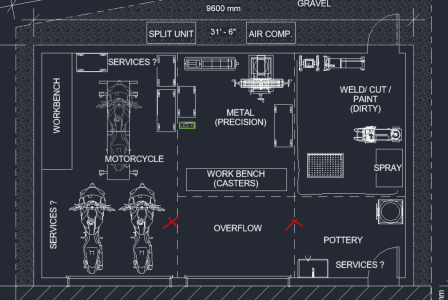
Show us your shops!

Storm door?

Each entrance of my house has a storm door and protects against the elements all year. Keeps the rain out in the summer and in the winter the interior doors don't ice up when -30.
Yes I have thought about that and know it would fix the problem....but a couple of things I don't like....
My man door is a 36" steel and steel frame door so a custom made screen door would be required.
I don't like the idea of having another door to open and move around.

The other thing I think would work but is not easy to implement is a roof overhang. But it is particularly complicated job. But would also be nice that I wouldn't have as big of a pile of snow right outside my door every time snow slides off the big roof (60 ft).
 
I try to not have any doors under a sloped roof, if the door opens out , you may not get it open, when needed, as snow is blocking it. Have you ever been hit by snow coming off a roof? Not fun! If the door opens in, may still not get out it, over a pile of snow.
Worst I have seen, was at a shop I started working at that had 3 inch’s of ice on the floor. The snow and ice off the roof had made a dam in front of the garage doors, with a bit of thaw, the water hit the dam and ran into the shop. We were not allowed to run the furnace over nite, so a stating ring in the morning.
I bust the dam out over a few days, and chased the water out of the shop though the day. Took most of 2weeks to get the floor ice free. It was like climbing into a deep freeze if you needed to go under equipment to work on it. DAM good thing I was young then!
 
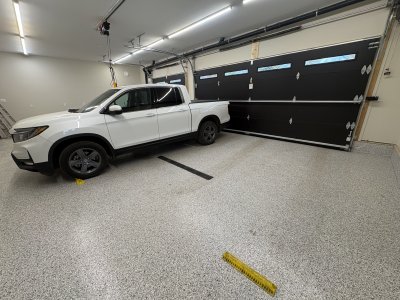
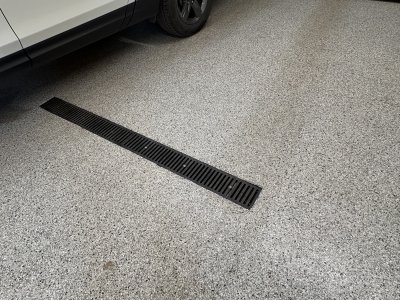
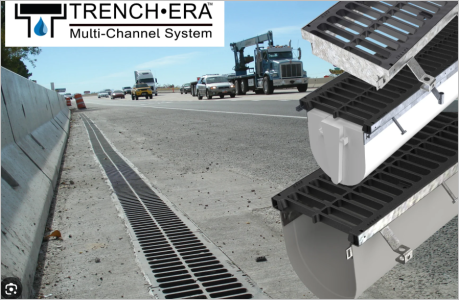
I put trench drains in my new garage vehicle parking area, a shallow slope of about 3%, still needs to squeegee a couple shallow puddles. My shop half is poured level.
One downside to a sloped floor; pushing my 800lb motorcycle out of the garage backwards, surprisingly a shallow slope has a lot of resistance to get a bike to move backwards.
 
One downside to a sloped floor; pushing my 800lb motorcycle out of the garage backwards, surprisingly a shallow slope has a lot of resistance to get a bike to move backwards.

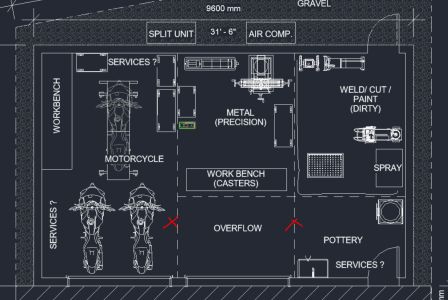
My bikes are under 600lbs each but this is also something I was thinking about and having to annoyingly dance them around in my currently aggressively slopped front garage. In the future motorcycle bay I might just slope towards the garage door which would make the second possible drain location less useful. I'm thinking I'd rather squeegee once in awhile then to struggle with the bikes if if I move them to other areas. I think my needs of the drain may be significantly less than others dealing with farm equipment, cars etc.

1795021615859.png
 

Attachments

  • 1795021441108.png
    1795021441108.png
    384 KB · Views: 2
My bikes are under 600lbs each but this is also something I was thinking about and having to annoyingly dance them around in my currently aggressively slopped front garage. In the future motorcycle bay I might just slope towards the garage door which would make the second possible drain location less useful. I'm thinking I'd rather squeegee once in awhile then to struggle with the bikes if if I move them to other areas. I think my needs of the drain may be significantly less than others dealing with farm equipment, cars etc.

View attachment 89619
I would recommend going as flat as possible, for water to drain without a squeegee I think 4% minimum is required, I designed several large public works equipment garages and the 2-3% slopes always required a squeegee to quickly dry the floors. Anything steeper just messes up lifts, rolling carts etc. Most of my motorcycles are sub 500 lbs but my one big touring bike (K1600 GTL) is a whale with no reverse like the GoldWing has.
 

Attachments

  • IMG_6088.jpeg
    IMG_6088.jpeg
    4 MB · Views: 5
  • IMG_6089.jpeg
    IMG_6089.jpeg
    5.8 MB · Views: 5
I would recommend going as flat as possible, for water to drain without a squeegee I think 4% minimum is required, I designed several large public works equipment garages and the 2-3% slopes always required a squeegee to quickly dry the floors. Anything steeper just messes up lifts, rolling carts etc. Most of my motorcycles are sub 500 lbs but my one big touring bike (K1600 GTL) is a whale with no reverse like the GoldWing has.

Thanks. I'm definitely flip-flopping on the sloping! Leaning towards flat or flatter since the only time I'm getting enough water in there is the rare time I'm washing something inside which I can't think of what that may be.
 
I'd MUCH rather have a dead flat floor and need a squeegee, than have it sloped. Machine moving is not fun with any kind of slope or grade. My floor splits right now the middle with a 3+" slope running to the wall, and my welding table on wheels is like trying to wrestle a cow when the castors are pointed right and the slope takes it.
 
This is why I prefer a very gentle slope not an aggressive one. I don't mind using a squeegee once in a while. What I don't want is water and other liquids crawling under my benches and machines and other stuff on the floor. I want it crawling in a desired direction.

All that said, if I could only have one ask, it would be a slope at the doors to stop the rain from filling my shop with water in a west wind.
 

No problem with my man doors. It's the big overhead doors that are the problem.

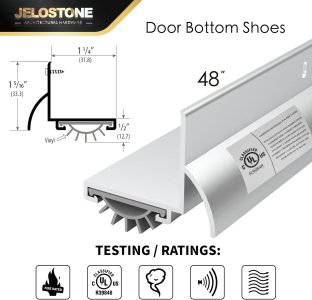
They don't seem to sell a version of those for big shop doors. But I'm not at all sure that they would work on a big door like mine even if they did make them. The doors move in the wind and I think those seals would be history in a few weeks.
 
No problem with my man doors. It's the big overhead doors that are the problem.

They don't seem to sell a version of those for big shop doors. But 8m not at all sure that they would work 9n a big door like mine even if they did make them. The doors move in the wind and I think those seals would be history in a few weeks.
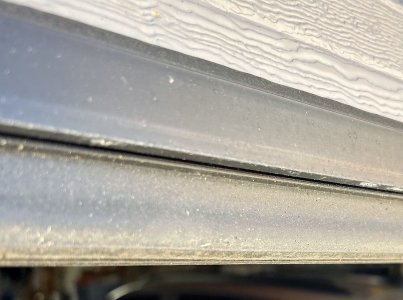
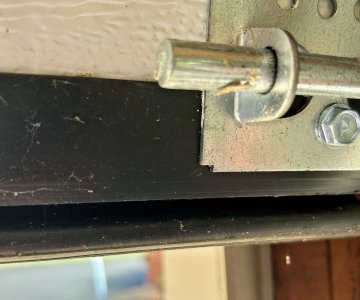
Do you have seals on the bottoms of these doors? I’ll post photos of what I have along the bottom of my 19’ wide garage door and the concrete sill.
 
Do you have seals on the bottoms of these doors? I’ll post photos of what I have along the bottom of my 19’ wide garage door and the concrete sill.

Yes, I have seals. When the wind blows hard, they move a bit. I end up with huge puddles inside.
 
Wow, sounds like some took sloping the floors real seriously. I have about 2inchs of slope in 24ft. I don’t mind some squeegee work, just don’t want to chase it for a week.
With that west wind, it is likely pushing rain on to the doors, then runs down them, to have the wind push under as you said. Big eves don’t even help that.
 
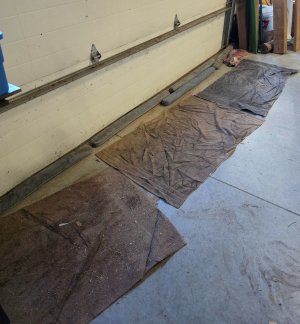
This is my flood control system. Usually the towels are stuck to the floor but I moved them just recently to get some farm equipment out.

The blue soakers near the door work quite well. But I'd prefer a slope that kept the water out.

20261120_111905.jpg
 
You should cut some sloping channels running outside to drain those puddles. A couple simple saw cuts should solve those problems i'd think. Caulk them in the winter if you're worried about heat loss.
 
This is my flood control system
Reminds me of a basement I used to know :/ I have seen where shops have a 'dutch drain' principle in problem areas like that. Of course easier when its contemplated before the pad pour.
All you need is enough slope within the drain to direct water to a sump area & pump it out. Cutting a slot could be some $$ or other issues but give you something to ponder.

1795196588628.png
 
Garage Door Pics

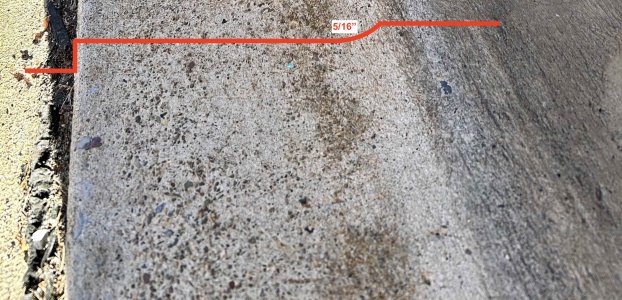
Threshold:
Garage Door Threshold annot.jpeg
The red line is the approximate profile; the seal sits on top of the lower portion of the threshold, filling the curved sloped portion.

Oval Robber Seal on the bottom of the door, outside view:
Garage Door Bottom Seal Outside.jpeg
Inside view:
Garage Door Bottom Seal Inside.jpeg
The seal is about 9/16" uncompressed, and is 90% compressed when the door is closed.

The door is on the East wall of the garage, and while the outside paving does slope imperceptibly away from the garage, when storms come they do blow rain against the door, but nothing enters the garage. And melting snow that is blown against the garage melts, it doesn't run inside either.
 
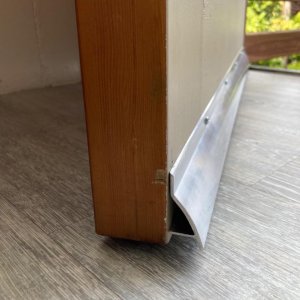
I used to have water getting driven in under my garage doors as well. I added these rubber threshold strips on the floor and have had very little wate penetration ever since. They've been down for many years now and still doing the job.
 
Back
Top