• Scam Alert. Members are reminded to NOT send money to buy anything. Don't buy things remote and have it shipped - go get it yourself, pay in person, and take your equipment with you. Scammers have burned people on this forum. Urgency, secrecy, excuses, selling for friend, newish members, FUD, are RED FLAGS. A video conference call is not adequate assurance. Face to face interactions are required. Please report suspicions to the forum admins. Stay Safe - anyone can get scammed.
  • The 2026 Calgary Area Meetup is set for Saturday May 30th at 10am. The signup thread is here! Robinhood has graciously offered to host the meetup again this year. Please note that you MUST RSVP to the notice linked above if you wish to come.

Fogging engines

Do you fog cylinders when storing an engine for winter


  • Total voters
    5

ShawnR

Ultra Member
Premium Member
I am wondering what the general consensus is on fogging engines. We bought a new pontoon boat last year and it came with a 60 hp Mercury 4 stroke. The winter storage suggestion, in addition to water stuff, is the changing of the oil and fogging of cylinders. I buy into the changing oil, even though I certainly don't do that on every 4 stroke engine I have. I also only put about 10 hours on it in a year, but condensation is condensation. But I wonder about the benefits vs MIFs (Maintenance induced faults) of fogging engines. The coils are attached to the plugs on this engine (or close) and so manipulating of the wires, potential for cross threading plugs, etc.

I have a friend who is great with engines (rebuilt his Lycoming O-320 1000 hours ago- still going great) and he does not fog in the fall. We don't fly here in the winter so storing a plane is akin to storing a boat. I trust him and his perspective as he has rebuilt many many engines and should know the ins and outs of engines, good and bad for them.

But, I still thought I would see if there is a consensus among this group of knowledgeable people.

What say yee?
 
Everybody has their ways, But on the boats I fog in the winter/fall, and change the oil in the spring, as I like to start off the season with a "fresh service" so I know what I'm putting in the water. Lower unit too, and I have an impeller to do next spring as well. I mention that as it's something to look at with every new to you boat, and I'd bank on doing it in the spring unless you have a verifiable service record saying it's been done in the last couple years.

There are many who say only to store with fresh oil, as used oil has broken down, and can cause corrosion issues etc.....Everybody has their ways......

I have other engines that are seasonal, but I don't fog them. They always (almost always) start reliably again when needed. The only thing I do is put stabil in the gas tank, and run them dry. Fogging the boat is done purely/mostly out of force of habit I guess. Just something I've always done since I was a kid, so it's something I still keep doing....And outboards are more expensive than 5hp side shafts....
 
I have done that but don"t do it on a regular basis and actually haven't for years now. Not because I think there is anything wrong with it but just because I must be a bit lazy. Also most of my "seasonal" engines usually get started up again within a few months. I think if I had a boat engine I would be more inclined to fog it each fall.
 
the only time i would "fog" is if i was putting an engine in long term storage, and then its "fog", loosen the rockers off, plug or tape the ports and/or openings off

Storage conditions matter as well, if its outside on a pallet with no intake manifold you better do something or its going to locked up in a year, if its in an engine bay/cowling, covered up and all accessories on (carb, exhaust manifolds, vacuum lines, etc) they CAN (not will) sit for years and have no problems with nothing done
 
The only engines I ever fog are our two-stroke seadoos. Seems to me it's a reasonable thing to do, given the extraordinary exposure to water that those engines have.
 
I do a full maintenance on every small engine at the end of the season. Oil change, clean plugs, run out and drain the carb, etc., etc., and fog the engine too. If it doesn't really have a season, it is usually done in the fall. I gauge the success of all this by longer term performance. Snow blower; 35+ years, generator 25+ years, chain saw; 35+ years, lawn tractor 20+ years. All start and run like new. I do the same with the boat motors, but they are only 8 years old, so I can't say if the extra time maintaining them is worth it, but I suspect it will be......eventually.
 
I don't do it, but if I lived near salt water I probably would.

There are at least 4 issues. Fuel varnishing, fuel degradation, oil degradation, and corrosion.

A major factor is storage term. For the winter is fine. For a year is sketchy. Better prep is a requirement for several years.

I used to believe in scheduled oil changes. But after years of engine durability testing, I've more or less abandoned the practice. The need to change oil is heavily influenced by the duty cycle - how many cold starts at what temperature, how often is the engine fully warmed up vs started and stopped before equilibrium, what portion of the drive cycle is at high throttle loads mountains vs hills vs trailer tow, vs stop N go, what is the ambient operational air quality, what quality of fuel is used (brand name vs discount - NOT premium vs regular), what quality of oil is used, etc etc. Manufacturers recommend oil changes and storage requirements based on less than optimum operating conditions. If you are not operating under bad conditions, you can easily extend oil change and winterizing intervals.

But if you cheap out on fuel or oil, drive aggressively, drive in bad conditions, frequently do short interval drives, or live in bad air conditions, then you need to maintain frequent oil changes and and more stringent winterizing practices.
 
Had to look up the term. Never done it. Don't have anything that gets stored for overly long (in excess of 1 yr). Anything stored over winter (or summer, in the case of the snow blower) gets fuel treatment and that's about it. Rarely will I change oil as part of winterizing, and if I do, it's always in the spring. Just made more sense to me, what with local chinooks (& the warming/cooling cycle they create) and all.
 
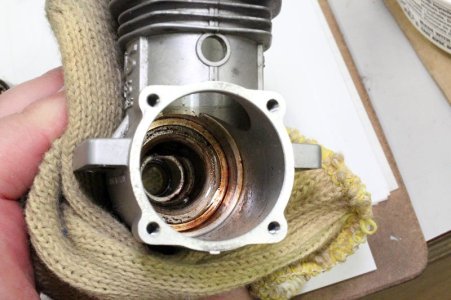
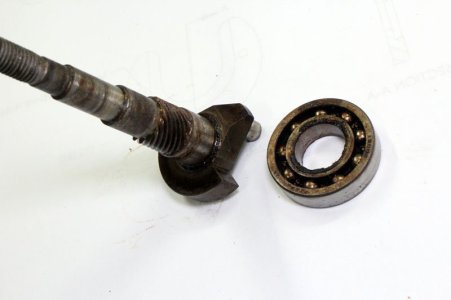
Watching this with interest as a bystander. I actually never heard the term fog before in this context. I'm sure RC glow ignition engines are not part of this gasoline fuel based discussion, but thought you might enjoy some pictures of what the organs look like after 30 years on a shelf with no treatment, just a bit of spent fuel & bypass residue inside. Methanol is hygroscopic meaning extracts water from air. Nitromethane if present, generates acids which attack metal. Synthetic oils can emuslify water & so it tends to keep the nasty, electrically conductive liquid film over internal metal surfaces, accelerating galvanic corrosion between dissimilar metals like steel components inside an aluminum crankcase. These engines are small, so other than some bench time, no real excuse for not storing them properly. All it takes is draining the residue & a liberal coating of something like ATF on all the surfaces. It chemically neutralizes the acid (low to high ph) & flips the surface energy so ATF layer adheres to metal surface blocking the nasty stuff from direct contact.

Anyway blah, blah - I've been reading that guys running gasoline RC ignition engines are having somewhat similar issues with pump gas which contains ethanol (short chain alcohol). Not just gumming but corrossion. When they switch to TruFuel type products (no ethanol,alkylate base stock) the problems dissappear. It solves the long term fuel storage issue & maybe benefits octane rating but the big concern was corrossion. I was going to buy some for the lawnmower & snowblower, but the stuff is not exactly cheap.
 

Attachments

  • 02072620.jpg
    02072620.jpg
    83 KB · Views: 2
  • 02072624.jpg
    02072624.jpg
    35.3 KB · Views: 2
If I restrict my comments to small engines, then all I have to go by is my personal anecdotal experience perhaps influenced by my expertise with automotive engines.

My anecdotal "experience" with small engines of all types including lawn mowers, snow blowers, chain saws, lawn whips, blowers, generators, outboard engines etc is that expected life has more to do with the manufacturer than it does with how much care I provide. Crappy cheap stuff doesn't last. Good more costly oem stuff seems pretty much immune to how much care I provide.

I probably fogged my last small engine 50 years ago. I don't do it anymore but I seldom buy junk so who knows, maybe it helps the lower cost engines. I don't own a higher quality small engine that isn't still running after many decades. But I have owned quite a few lower quality ones that I've had to replace. I do not believe maintenance or storage had anything to do with it.

A notable example is a Johnson 15hp outboard that has been sitting in my shop unused for about 20 years after about another 20 years of hard use. The fuel tank had lost all its high ends and the fuel was garbage. The fuel hose and hand pump was rotted. But I pulled the plug and looked at the cylinder walls with my bore scope, replaced the hoses and hand pump, drained and replaced the fuel, pumped it a few times, and it started and ran like it was brand new on the second pull. My son has been using it all this past summer.

In summary, that maintenance and storage stuff doesn't appear to matter if your equipment is good quality. I can't say if it matters on poorer quality equipment, but I'd guess that it doesn't.
 
Back
Top