
• Scam Alert. Members are reminded to NOT send money to buy anything. Don't buy things remote and have it shipped - go get it yourself, pay in person, and take your equipment with you. Scammers have burned people on this forum. Urgency, secrecy, excuses, selling for friend, newish members, FUD, are RED FLAGS. A video conference call is not adequate assurance. Face to face interactions are required. Please report suspicions to the forum admins. Stay Safe - anyone can get scammed.
  • The 2026 Calgary Area Meetup is set for Saturday May 30th at 10am. The signup thread is here! Robinhood has graciously offered to host the meetup again this year. Please note that you MUST RSVP to the notice linked above if you wish to come.

Tool Diamond wheel truing dressers

Tool

TorontoBuilder

Sapientia et Doctrina Stabilitas
I have previously used a molybdenum stick in a grinding vise to true up diamond wheels.

Thanks to Rob Renzetti, and his video which I'm sure you've all seen.

I'd call it my favourite method, since it's my only experience trying to true a resin bond diamond wheel. It seems to work well enough but I paid over $50 for the stick.

I wanted to try the other options, a skewed type wheel dresser, and a brake type dresser as an option, and see how well they worked. The wheels are about $15USD each from mcmaster carr.


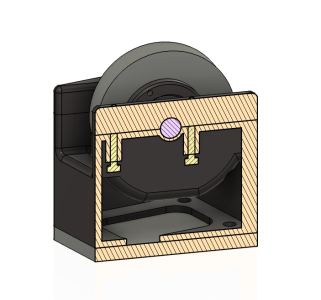
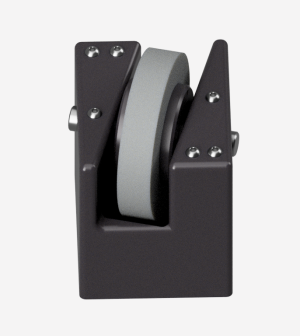
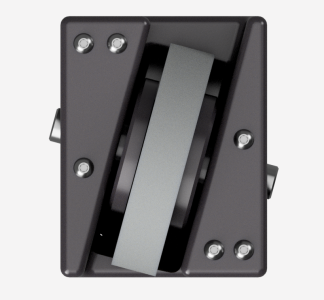
I figured I'd 3D print a shell with a 3mm thick wall, using loop setting and zero infill... whcih is better alternative to trying to fiddle with vase mode to make thin walls. Then I'll fit my threaded inserts and fill the cavity with epoxy and gravel mix. A 1/4" steel plate the bolts to the bottom to allow the use of magnetic chuck.

Two caps hold the spindle to the base. The spindle is 3/8" precision ground shaft, a hub will spin freely on a pai of bearings. Pretty simple.
1791042245345.png


Screenshot 2026-10-03 103207.png


Screenshot 2026-10-03 103455.png
 
I figured I'd 3D print a shell with a 3mm thick wall, using loop setting and zero infill... whcih is better alternative to trying to fiddle with vase mode to make thin walls. Then I'll fit my threaded inserts and fill the cavity with epoxy and gravel mix. A 1/4" steel plate the bolts to the bottom to allow the use of magnetic chuck.
Interesting. I have zero surface grinder experience. I've only dressed my toolpost grinder with a traversing single point diamond. Maybe this wheel based dressing principle is a thing but my gut instinct is that it looks sketchy. One tiny bit of loosening or play or distortion or runout anywhere in the dresser assembly & the whole affair could blow up in your face with disasterous consequences. I cant tell by the video but his wheel holder looks like solid steel. I'm apprehensive that if your base distorts by whatever mechanism it could be the infeed jam point. Yes epoxy/aggragate mix would make a stiffer composite sandwich product vs 3DP alone, & aggargate makes excellent vibration dampening. But its actually not that stiff or strong. And the composite sandwich of 2 materials entirely depends on adhesion to the 3DP wall which... I wonder. Plastics are very offstandish to most all resins. In fact I've cast epoxy parts in 3DP molds the odd time completely forgetting the release agent & (with a bit of difficulty) the part pops out. If you have any micro-parting between the 3DP surface & aggragate you basically have nothing for mechanical stability IMO. It becomes a core rattling around inside a shell. If it was any kind of part where consequences were not so dramatically catastrophic I'd say go for it. But 2 spinning wheels, the dressing wheel going at 2-4x faster due to ratio... Yeesh.

1791049388753.png1791049415134.png
 
Interesting. I have zero surface grinder experience. I've only dressed my toolpost grinder with a traversing single point diamond. Maybe this wheel based dressing principle is a thing but my gut instinct is that it looks sketchy. One tiny bit of loosening or play or distortion or runout anywhere in the dresser assembly & the whole affair could blow up in your face with disasterous consequences. I cant tell by the video but his wheel holder looks like solid steel. I'm apprehensive that if your base distorts by whatever mechanism it could be the infeed jam point. Yes epoxy/aggragate mix would make a stiffer composite sandwich product vs 3DP alone, & aggargate makes excellent vibration dampening. But its actually not that stiff or strong. And the composite sandwich of 2 materials entirely depends on adhesion to the 3DP wall which... I wonder. Plastics are very offstandish to most all resins. In fact I've cast epoxy parts in 3DP molds the odd time completely forgetting the release agent & (with a bit of difficulty) the part pops out. If you have any micro-parting between the 3DP surface & aggragate you basically have nothing for mechanical stability IMO. It becomes a core rattling around inside a shell. If it was any kind of part where consequences were not so dramatically catastrophic I'd say go for it. But 2 spinning wheels, the dressing wheel going at 2-4x faster due to ratio... Yeesh.
A couple of points to address the concerns you raise, and see if the design addresses the concerns.

Firstly, the PLA-CF is mostly just a shell mould to contain the epoxy granite. I could have altered the shell setting to make the mould completely removable but though why bother for a one off design.

That said, epoxy bonds very well to PLA and the rougher the surface texture the better the bond... The CF reinforced PLA has a texture that lends itself to mechanical keying but orca slicer also has a fuzzy skin setting that I can apply to the internal walls to make an even better surface for bonding.

The majority of the forces are compressive forces which epoxy handles very well.

This method of skew angle truing is tried and true. The driven diamond wheel speed, the size ratio and the skew angle is what determines the speed of the dressing wheel. Typically ~2000 rpm with full contact at 15 degree offset on a surface grinder.

The shaft has far more influence on vibration than the actual base. The originals are much thinner parts of cast iron because that was common material and technical plastics were not. I expect this to have less vibration that can be transferred to the diamond wheel than the moly stick method.


The forces acting on the base are downwards compression and some minor shearing force from the driving diamond wheel shearing across the skewed dressing wheel face
 
I'm going to do some epoxy aggragate + 3DP experiments for some machine type accessories which would normally be CI, so we will have to compare notes. Actually you can take this mechanical locking of epoxy even further than relying on surface roughness alone with 3DP riblets or ledges. Just have to mitigate any open air bridging issues, usually resolved with vibration or vaccum depending on the part.

Anyway, back the wheel dresser, does it even need to have a wheel well & axle at some an angle relative to rectangular body footprint? You need a steel base plate for mag vice anyway. So two vertical ears pinned & bolted on either side, or welded if you have one with a resultant U-shape. Same bearing holes & you are done, no? I mean you are going to set the device at some angle to the main grinding disc, I feel if it was a rectangular plate U you can now set a specific & repeatable angle relative to edge of mag vise if there is some sweet spot?
 
I'm going to do some epoxy aggragate + 3DP experiments for some machine type accessories which would normally be CI, so we will have to compare notes. Actually you can take this mechanical locking of epoxy even further than relying on surface roughness alone with 3DP riblets or ledges. Just have to mitigate any open air bridging issues, usually resolved with vibration or vaccum depending on the part.

Anyway, back the wheel dresser, does it even need to have a wheel well & axle at some an angle relative to rectangular body footprint? You need a steel base plate for mag vice anyway. So two vertical ears pinned & bolted on either side, or welded if you have one with a resultant U-shape. Same bearing holes & you are done, no? I mean you are going to set the device at some angle to the main grinding disc, I feel if it was a rectangular plate U you can now set a specific & repeatable angle relative to edge of mag vise if there is some sweet spot?
I could make a simple u shaped bracket and be done... but I'm experimenting at the same time.

I like to kill two birds with one stone.

That and I don't have to leave the house to do this job if I buy off the shelf threaded inserts.

I want to make a few grinding fixtures that use similar construction.

I was planning on both vibration and degassing.

I'm also going to experiment to see if I can get a nice 1.2mm wall section that can work if I mix a little more fluid epoxy mix

Oh and I plan on making concrete experiments too.
 
Back
Top