
TorontoBuilder
Sapientia et Doctrina Stabilitas
I have previously used a molybdenum stick in a grinding vise to true up diamond wheels.
Thanks to Rob Renzetti, and his video which I'm sure you've all seen.
I'd call it my favourite method, since it's my only experience trying to true a resin bond diamond wheel. It seems to work well enough but I paid over $50 for the stick.
I wanted to try the other options, a skewed type wheel dresser, and a brake type dresser as an option, and see how well they worked. The wheels are about $15USD each from mcmaster carr.
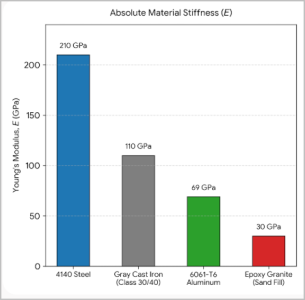
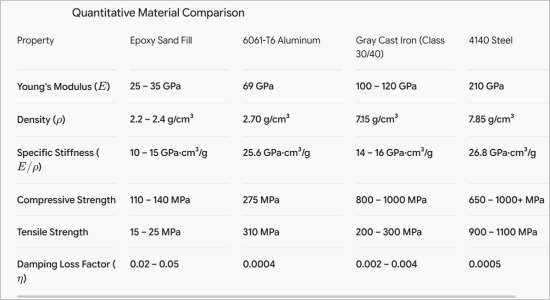
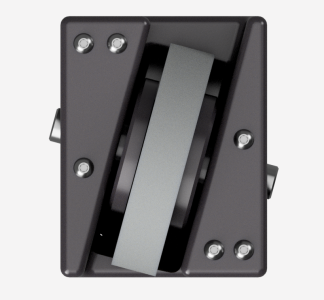
I figured I'd 3D print a shell with a 3mm thick wall, using loop setting and zero infill... whcih is better alternative to trying to fiddle with vase mode to make thin walls. Then I'll fit my threaded inserts and fill the cavity with epoxy and gravel mix. A 1/4" steel plate the bolts to the bottom to allow the use of magnetic chuck.
Two caps hold the spindle to the base. The spindle is 3/8" precision ground shaft, a hub will spin freely on a pai of bearings. Pretty simple.
Thanks to Rob Renzetti, and his video which I'm sure you've all seen.
I'd call it my favourite method, since it's my only experience trying to true a resin bond diamond wheel. It seems to work well enough but I paid over $50 for the stick.
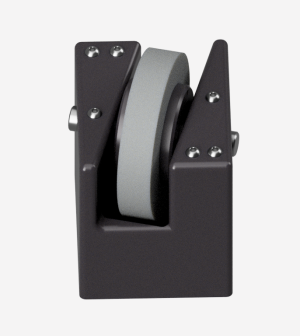
I wanted to try the other options, a skewed type wheel dresser, and a brake type dresser as an option, and see how well they worked. The wheels are about $15USD each from mcmaster carr.
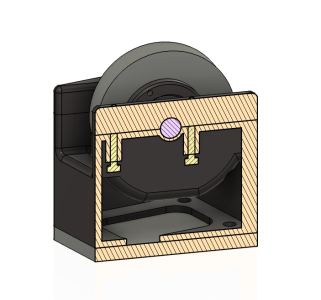
I figured I'd 3D print a shell with a 3mm thick wall, using loop setting and zero infill... whcih is better alternative to trying to fiddle with vase mode to make thin walls. Then I'll fit my threaded inserts and fill the cavity with epoxy and gravel mix. A 1/4" steel plate the bolts to the bottom to allow the use of magnetic chuck.
Two caps hold the spindle to the base. The spindle is 3/8" precision ground shaft, a hub will spin freely on a pai of bearings. Pretty simple.