• Scam Alert. Members are reminded to NOT send money to buy anything. Don't buy things remote and have it shipped - go get it yourself, pay in person, and take your equipment with you. Scammers have burned people on this forum. Urgency, secrecy, excuses, selling for friend, newish members, FUD, are RED FLAGS. A video conference call is not adequate assurance. Face to face interactions are required. Please report suspicions to the forum admins. Stay Safe - anyone can get scammed.
  • The 2026 Calgary Area Meetup is set for Saturday May 30th at 10am. The signup thread is here! Robinhood has graciously offered to host the meetup again this year. Please note that you MUST RSVP to the notice linked above if you wish to come.

3D Printer Happened

If you want to save some money/space on a filament dryer, you can use the heated bed on your printer & a cardboard box instead. I did this and revived some old PLA I had neglected. Functionally, it's pretty much the same as a dedicated filament dryer.

Question: would it be worthwhile to throw some desiccant in the filament dryer (or printer heated bed) while it's drying?

This is the easiest, fastest DIY method to dry filament. It mirrors the open loop system I spoke about, heat and ventilation.

BUT, depending on the material it will cut the time you can actually print with your printer by 25 to 50%. That's a HUGE loss if you have a $500 to $1000 printer. 5 to 12 hrs to merely dry filament....

A cardboard box, an old hair dryer, an inkbird temperature controller and a rack to hold spools is cheap and easy. Hair dryer on lowest speed and heat plugged into inkbird.... temp control. Ported to you box... temp probe sensing outlet airflow.

addendum
I used a large tote, for both storage and drying, but I plan to make a separate drier that does not see heated airflow... I can smell that tote off gas and I don't like it.

Totes are great storage if they have a foam gasket sealing system... but they suck for active drying.

A heavy refrigerator box would be good. Something you can fit at least ten spools at a time, dry then store dry spools with desiccant packs
 
Last edited:
Desiccant is a protectant, not a cure.

Guide to pre-printing drying times

Well, that's no good. I had wanted a cure...... I don't want a filament dryer.

The article you linked is great! Lots of info there and some I didn't anticipate.

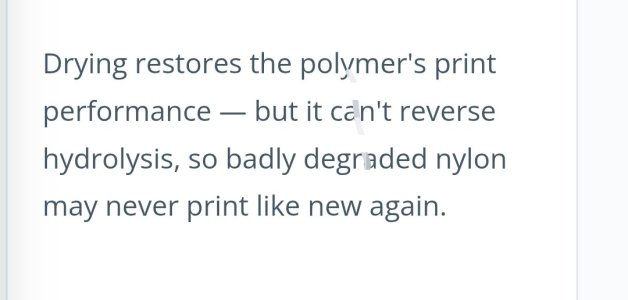
Screenshot_20261006_124244_Chrome.jpg

First I heard of molecular changes to the polymer itself......

Definitely need to keep things dry! Don't want the PLA degrading.

Adds new meaning to @PeterT's questions about printed parts!

Enjoyed the document very much John, but it isn't as clear as you are.
 
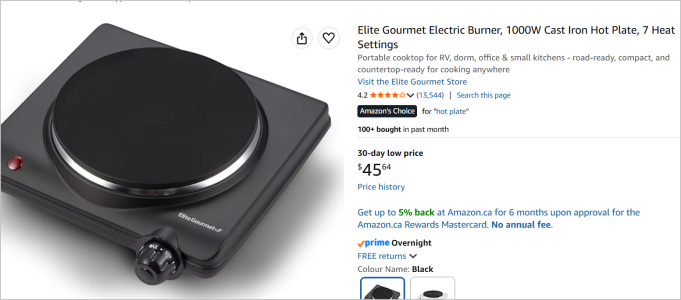
A cheapo kitchen hot plate comes to mind but I suspect the lowest 'warming' setting might be excessive vs optimal filament temp. Back when I was making longish composite parts, I made a hot box for resin tempering with regular incandescent light bulbs in an insulated foam coffin & little computer fan for circulating. I actually had to select low wattage bulbs & make some bleed holes to maintain 50-60C otherwise it would get too toasty. Those bulbs are old school replaced with efficient LED's but probably better/safer heat elements maybe with thermostat control. Probably reinventing the wheel here. What do the hobby / small business print farms use?

1791308313959.png
 
A heavy refrigerator box would be good
I was thinking an old chest freezer would be ideal because they're pretty much free. If you're good, you could even re-configure the compressor into a de-humidifier or a heat pump heater. You'd need the space for it though, and you'd need to print a lot to justify it.

Using the printer itself as a dryer works for me because I don't actually print all that much, I have enough printer downtime to dry whatever I need. I store my PLA in the open and only dry it when I see problems, usually run out the spool before that happens. Other filaments require more care.
 
Back
Top