• Scam Alert. Members are reminded to NOT send money to buy anything. Don't buy things remote and have it shipped - go get it yourself, pay in person, and take your equipment with you. Scammers have burned people on this forum. Urgency, secrecy, excuses, selling for friend, newish members, FUD, are RED FLAGS. A video conference call is not adequate assurance. Face to face interactions are required. Please report suspicions to the forum admins. Stay Safe - anyone can get scammed.
  • The 2026 Calgary Area Meetup is set for Saturday May 30th at 10am. The signup thread is here! Robinhood has graciously offered to host the meetup again this year. Please note that you MUST RSVP to the notice linked above if you wish to come.

Test 1-1/2”-8 TPI Back Plate?

whydontu

I Tried, It Broke
Premium Member
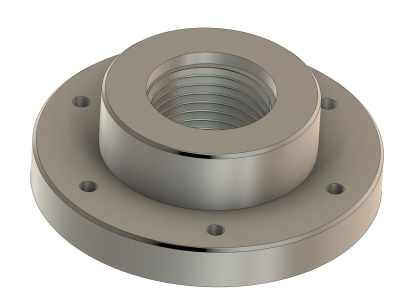
Anyone have a 1-1/2”-8 TPI back plate that I can buy cheap or borrow? My Barnes lathe looks to have an 1-1/2”-8 spindle, but when I measure it seems to be over 1-1/2” o.d.. I need to get a new chuck for the lathe (the century-old Cushman chuck is beat-up and best I can get is 0.015” run-out) but I can’t justify spending a couple of hundred on a chuck that might not fit.

So if I can find a test back plate or chuck I can confirm if a current back plate will fit, then I can decide if it’s worth buying a new chuck.

Any options put there?
 
Last edited:
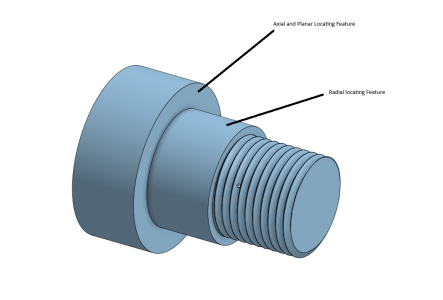
One thing to remember, the way most lathes with threaded spindle noses are setup, there is a threaded section and behind that a plain cylindrical section. The cylindrical section is the actual radial locating feature for the chuck and it can vary in both length and diameter for a given spindle thread.

spindleNoseExample.png

There are some lathes with the same thread for the spindle nose, but with differently sized radial locating sections. The example I remember was South Bend vs Atlas 1 1/2-8 spindle nose. In that case I seem to recall the difference in diameter was only something like 0.010", so in one direction the chuck won't fit and in the other direction the chuck will screw on just fine, but wouldn't necessarily repeat positionally. This isn't the thread that I originally read it from, but it was the first example of someone talking about this that I could find. The fix for this is either boring the backplate out to match your spindle nose, or sleeving it, then reboring it if it's already bigger.

Another issue that you can run into is that the unthreaded section isn't necessarily the same length for all machines of the same spindle thread. I actually encountered this one myself with a NOS Bison 1 1/2-8 chuck that I bought for a 10" Atlas that I used to own. The backplate on that chuck had an unthreaded locating section that was excessively long for my Atlas' spindle nose. As a result I could only screw it on something like a turn and a half, or maybe two turns before it bottomed out. It worked fine like that, but I worried, so I wanted to fix it. The fix was pretty simple. I held the chuck backwards (backplate facing the tailstock) in a second chuck and face off the excess length (something like 0.200" in that case). You have to take make sure that you get the chuck properly square to the plane of the spindle though because that back face is also a registration feature that sets the plane that the chuck lies in when mounted.

tl;dr Even if the thread matches it still might not fit properly, though that can generally be rectified.
 
I have an embarrassing number of dog drive plates in 1 1/2 - 8 tpi I do believe, should one of those fancy you as well.... I think it was 7 but might be down to five or so...
 
Thanks for the replies. I'm prepared to do machining as needed, this is for my secondary goofing-around lathe and I can use my newer lathe to modify whatever I end up getting. My main concern is just to know if the existing thread matches current thread form and dimensions, then I can be reasonably confident that a chuck from Vevor or eBay will mostly fit.

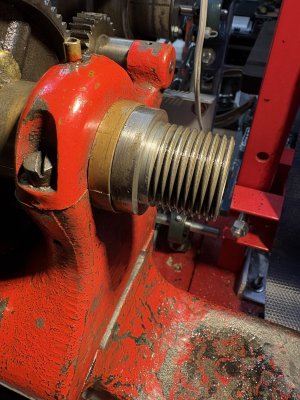
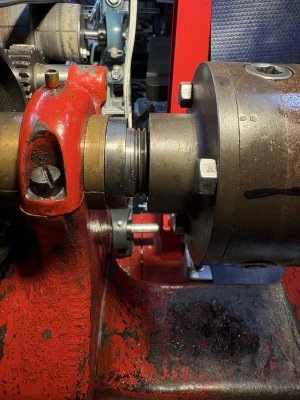
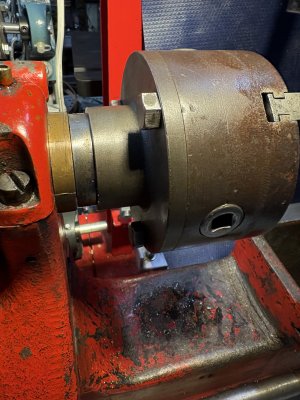
The spindle nose is quite short, with a very shallow bearing surface that's not much larger than the thread o.d.. The existing Cushman chuck just sits tight up against the spindle end plate, with no overlap. 'm assuming whatever I end up with will need some machining and shimming to get running true.

IMG_5690 2.jpeg
IMG_5691.jpeg
IMG_5692.jpeg
 
I have an embarrassing number of dog drive plates in 1 1/2 - 8 tpi I do believe, should one of those fancy you as well.... I think it was 7 but might be down to five or so...
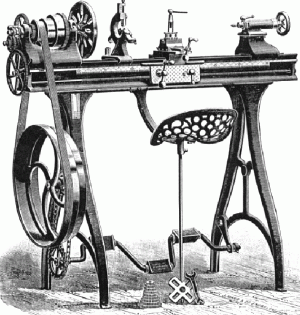
Apparently the original Barnes drive plates is worthy of a stern warning from the folks at lathes.co.uk:

"In the picture above, the slotted cruciform-style backplate on the floor by the pedals was used as a "driver" or "catch" plate to turn work between centres - this particular design must be the most dangerous ever invented - perfect for grabbing the sleeve of an unsuspecting operator and winding him into the mechanism. If you have one with your antique lathe - bin it, or frame it, but don't use it; ever."

Lathes.co.uk doesn't offer any warnings about the exposed gears, chains, and belts.

I have a fan spacer from a 1961 GMC 283 V8, looks just like the Barnes backplate. Once I know the proper thread form, I might just machine the fan spacer to stay authentic.

Barnes Drive Plate.gif
 
Interesting too that they don't mention the standard form of drive dog as being a particular danger. Surely the square headed screw that it clamps it to the workpiece is much more likely to grab a sleeve than a closed ended drive plate like that
 
Apparently the original Barnes drive plates is worthy of a stern warning from the folks at lathes.co.uk:

"In the picture above, the slotted cruciform-style backplate on the floor by the pedals was used as a "driver" or "catch" plate to turn work between centres - this particular design must be the most dangerous ever invented - perfect for grabbing the sleeve of an unsuspecting operator and winding him into the mechanism. If you have one with your antique lathe - bin it, or frame it, but don't use it; ever."

Lathes.co.uk doesn't offer any warnings about the exposed gears, chains, and belts.

I have a fan spacer from a 1961 GMC 283 V8, looks just like the Barnes backplate. Once I know the proper thread form, I might just machine the fan spacer to stay authentic.

View attachment 87261
Ummmm..... if a guy started getting caught up, wouldn't he stop pedaling? 🙄
Asking for a friend of course..... perhaps the startled turner goes faster to escape?😳
 
Because I have zero patience, I did some digging and ended up buying an Accusize 1-1/2"-8 backing plate. They have one that is a perfect match for the spindle plate on my Busy Bee B2227L lathe, so I can use my existing 3-jaw, 4-jaw, 5C, and faceplate from the B2227L on the Barnes lathe.

However, as I suspected, the Barnes lathe is about 0.015" too big to fit the Accusize 1-1/2"-8 female socket. It goes on about 1/4 turn then jams. I think my only path forward is to very carefully open up the thread on the Accusize plate to match the Barnes spindle. I can't do it on the Barnes because I don't have the correct change gears, so I'll need to do it on the BB machine.

Any suggestions on how to do this? I have @jcdammeyer 's ELS on the BB machine, but I'm not sure how it will handle this when I'm only cutting about 10 turns at 8 TPI.

Or should I find someone with a cnc mill and do it by thread milling?
 
Is the mismatch with the diameter of the thread (thread OD too large, or thread root interference) or is it a problem with the thread pitch?
 
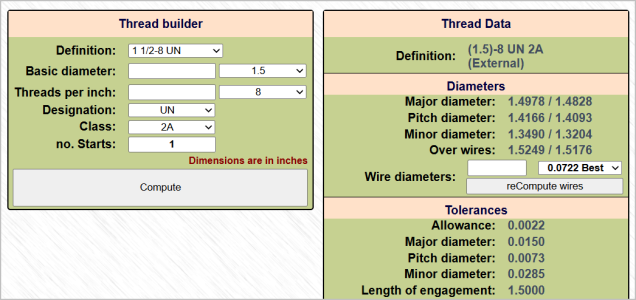
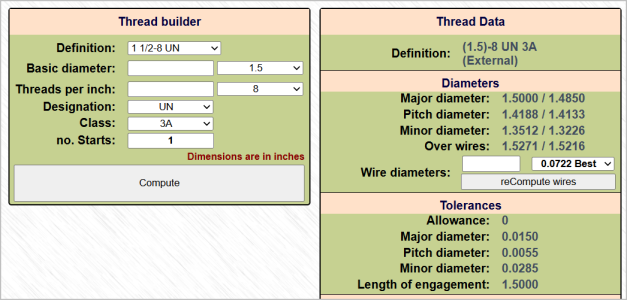
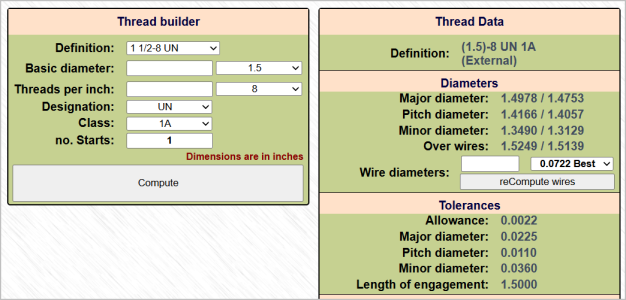
How does your OD compare to these 2A & 3A major diameters? 2A class would be considered a normal fit, 3A would be a tighter fit. Not exactly sure how a spindle thread would be designed around.
Better yet would be to measure the pitch diameters. Not that difficult with wires. Notice PD min/max also changes with thread class.

1790457687804.png

1790457746364.png
 

Attachments

  • 1790458075869.png
    1790458075869.png
    145.2 KB · Views: 1
Metrology ain’t my strong suit. Thread pitch on the Barnes perfectly matches my 8 tpi Starrett screw pitch gauge, the Starrett gauge also fits perfectly on the female thread on the Accusing plate. I don’t have any thread wires, but I suppose I can Rube Goldberg something. Using a micrometer on the thread o.d. on the Barnes spindle gets me 1.515” at multiple places on the thread. Same 1.515” using a vernier perpendicular to the spindle thread.

I can visualize opening up the Accusize internal thread, but I’ve never had much success chasing an existing external thread. Contemplating doing this on a very coarse, very large, and very short internal thread gives me the willies.
 
Metrology ain’t my strong suit. Thread pitch on the Barnes perfectly matches my 8 tpi Starrett screw pitch gauge, the Starrett gauge also fits perfectly on the female thread on the Accusing plate. I don’t have any thread wires, but I suppose I can Rube Goldberg something. Using a micrometer on the thread o.d. on the Barnes spindle gets me 1.515” at multiple places on the thread. Same 1.515” using a vernier perpendicular to the spindle thread.

I can visualize opening up the Accusize internal thread, but I’ve never had much success chasing an existing external thread. Contemplating doing this on a very coarse, very large, and very short internal thread gives me the willies.
Is the thread all the way through? If so it doesn't matter as much if it's 10 threads or 16. The difficulty is in watching the engagement on an internal thread.

Do the other Busy Bee checks etc. fit on the barnes correctly? ie. Is it the accusize that is too small ID or is it the Barnes is too big?

I must admit I've never chased an internal thread with my ELS. Lots of times an external thread. Just keep changing the BEGIN position until under a magnifying glass the tool bit looks like it's right in the middle.
Then do passes each time starting a bit deeper until it starts to just scratch the surface. Kind of like bluing the surface and doing a scratch pass and then comparing the scratch with a thread gauge.
 
Back
Top