• Scam Alert. Members are reminded to NOT send money to buy anything. Don't buy things remote and have it shipped - go get it yourself, pay in person, and take your equipment with you. Scammers have burned people on this forum. Urgency, secrecy, excuses, selling for friend, newish members, FUD, are RED FLAGS. A video conference call is not adequate assurance. Face to face interactions are required. Please report suspicions to the forum admins. Stay Safe - anyone can get scammed.

Shop Shop floor tiles

Shop

canuck750

Super User
I want to install a high load capacity pvc interlocking floor tile in my shop area in my new build.
I am having an epoxy floor put down In the vehicle parking area this week but I don’t want epoxy on the shop concrete slab. My current shop has epoxy but I find it chips fairly easily from dropping tools etc.

I know.. be more careful, at least that’s what the epoxy guy told me this morning.

I have heard of industrial quality interlocking pvc tile, 4 to 8 mm thick, and once locked together it’s water tight.

I have read a fair number of negative reviews for the pvc tiles that Costco, Rona etc sell. Not water tight, too thin, poor joining etc. The other ones I see are slotted and let water, oil etc run underneath, I definitely don’t want that type.

I have read that industrial quality pvc will handle point loads of heavy machinery like lathes and mills, motorcycle lifts and offer some anti fatigue.

Anyone know of a Canadian supplier for a warehouse or shop quality interlocking pvc floor tile?
 
Unless they are being glued together I have a hard time thinking they would be watertight but these guys say they are.

Thanks, I think I saw this retailer before but they are in the USA and I want to buy from a Canadian distributor and hopefully Canadian made
 
There are a number of "Epoxy" products, ranging from paint to coatings to toppings. All require proper slab preparation and installation by those who know how (yes, HD and Lowes sell "coatings" for DIY, but you get what you pay for) Toppings are 1/4" — 3/8" thick and need to be installed by certified contractors, but they will outlast you. Urethane is more forgiving than Epoxy, but also costs more. Better yet is MMA (Methyl Methacrylate) because it can be patched relatively easily.

One of the best concrete surfaces for a shop floor is a troweled-in surface treatment like Stonhard (dry powder cast over a wet slab then troweled in; unfortunately no longer available it seems).

Keep in mind that any resilient flooring ins going to be an issue if you are going to level heavy machines or to bolt something down.
 
Just wondering how any of these floors would hold up in a welding environment? I would hate ruin the coating by doing welding say on the floor.
 
Just wondering how any of these floors would hold up in a welding environment? I would hate ruin the coating by doing welding say on the floor.
No topping/coating/paint is going to stand up to abuse like welding in direct contact, but a troweled-in powder hardener will help. Another option would be a spray-on densifier & repeller: most of these are applied after troweling and will also assist with curing, but some can be applied to clean concrete after curing and penetrate the surface to seal and strengthen. An industrial (not commercial) concrete contractor can make recommendations.
 
How about sheets of 3/8" OSB or ply with sheet metal over top screwed down with 1/4" wafer head screws. Cut them to size and lay them down in the welding area over the good flooring. When needed lift them up and have a spot to stack them off to the side. Like puzzle pieces.
 
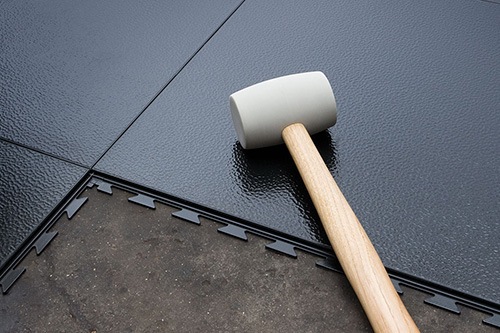
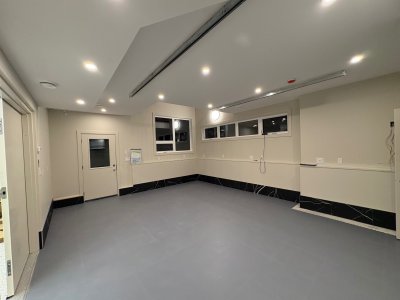
I decided upon Vevor interlocking garage floor tiles, these are PVC, about 20” square and 4mm thick. The surface has a diamond plate raised pattern. Not 100% waterproof joints but damn near, they will handle wet mopping and fluid spills.
I don’t have access to a wide format plastic tile cutter so a fine tooth blade in my table saw was used for cutting. Home Depot and local flooring shops rent 12” wide cutters but it seems no one had the 24” wide units. The trick to cutting on a table saw is to move quickly so as to not melt the plastic and bind up the blade.
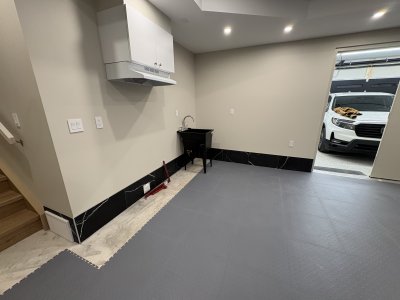
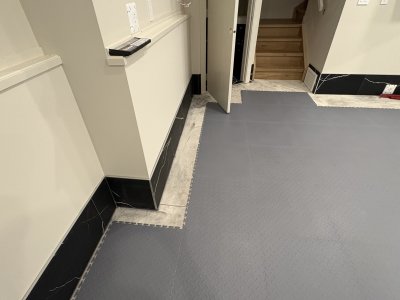
I spent about 3 hours today getting about 3/4 the way through installing them over a concrete slab on grade. A fair amount of tapping the interlocking joints with a dead blow plastic hammer. Most joints close up nicely but some are stubborn and will need more attention. Overall I am happy with the results so far. The vehicle parking side of my shop was treated to an epoxy floor but I decided against epoxy in my tool room side, past experience with epoxy flooring in my current shop, chips too easily, was the issue.
Hopefully these 4mm thick tiles will handle my lathe and mill plus motorcycle lifts. I used ceramic tile for the base around the work area, a continuation of the tile in the 1/2 bath on the main level, super cheap Home Depot clearance tile under $2.00 / sf.
Some more finishing of the pvc tile install to do tomorrow but getting closer to being able to move equipment in.
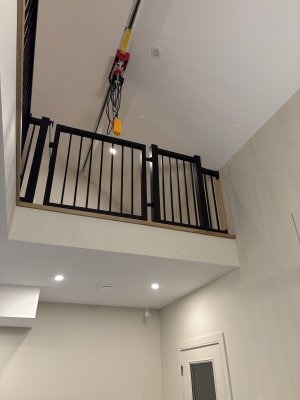
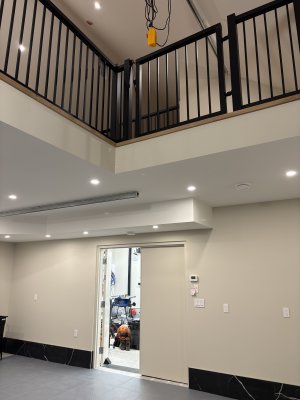
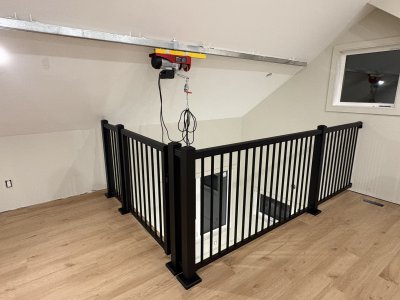
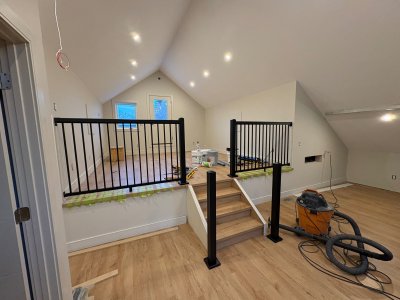
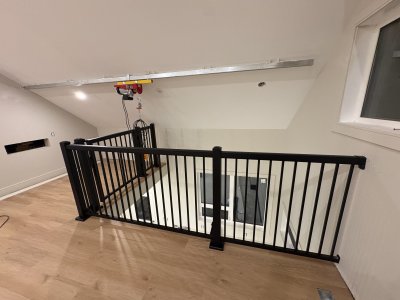
I am almost done finishing the upper level, soon I can hoist motorcycles upstairs.
 

Attachments

  • IMG_6081.jpeg
    IMG_6081.jpeg
    2.5 MB · Views: 6
  • IMG_6078.jpeg
    IMG_6078.jpeg
    2.3 MB · Views: 6
  • IMG_6076.jpeg
    IMG_6076.jpeg
    2.2 MB · Views: 6
  • IMG_6080.jpeg
    IMG_6080.jpeg
    1.8 MB · Views: 6
  • IMG_6079.jpeg
    IMG_6079.jpeg
    2.1 MB · Views: 6
  • IMG_6014.jpeg
    IMG_6014.jpeg
    2.4 MB · Views: 6
  • IMG_6018.jpeg
    IMG_6018.jpeg
    2.8 MB · Views: 6
  • IMG_6015.jpeg
    IMG_6015.jpeg
    2.6 MB · Views: 6
Back
Top