• Scam Alert. Members are reminded to NOT send money to buy anything. Don't buy things remote and have it shipped - go get it yourself, pay in person, and take your equipment with you. Scammers have burned people on this forum. Urgency, secrecy, excuses, selling for friend, newish members, FUD, are RED FLAGS. A video conference call is not adequate assurance. Face to face interactions are required. Please report suspicions to the forum admins. Stay Safe - anyone can get scammed.
  • The 2026 Calgary Area Meetup is set for Saturday May 30th at 10am. The signup thread is here! Robinhood has graciously offered to host the meetup again this year. Please note that you MUST RSVP to the notice linked above if you wish to come.

Anyone try Wamo / self-driving yet?

Though I'm not an aviation guy, about 20 years ago I visited the Hiller Aviation Museum in San Carlos CA. There is so much cool stuff in there, especially the person-sized machines. They have the flying platform (which was too quick to destabilize and killed a few test pilots, iIrc), but I think my favourite is still the "extraction chopper", a package about the size of a car rooftop box intended to be dropped behind enemy lines so a downed pilot (for example) could open the package and quickly assemble a one-man helicopter with enough fuel to run for something like 15 minutes.
 
No idea! But I can see that improving and somewhat more usable for one way A-B trips (ignoring legal stuff)? Seems easier to air trust an average human body around than a 3000lb car. But probably also lead to a great boom in healthcare and casket industries!

And to get a sense of what it must be like, at just about any lake with tourist traffic are the similar rigs powered by a hose from a sea-doo. Sure, you're tethered by the hose and distance-limited, but (unlike the Gravity suit) you can pull stunts like diving into (and ripping back up out of) the water.
 
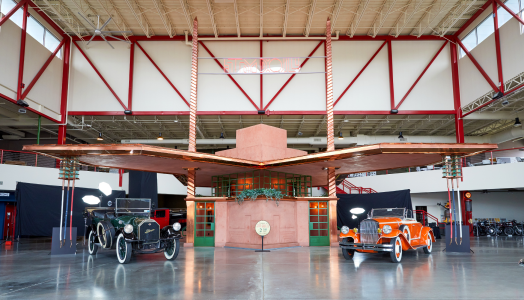
My recent favourite was the Buffalo Pierce-Arrow Transportation museum, in particular for their rare Frank Lloyd Wright designed gas station: https://www.pierce-arrow.com/

1793038990810.png

Manufacturers wanted to expand their market by attracting women drivers that were non existing at the time. So they decided the marketing point would be at the gas station, and had Wright design a "women-friendly" experience that included easy-to-use active pumps and rest areas, complete with the first porcelain sink and toilet. Manufacturer wanted to pay only a one-time fee but Wright wanted royalties for every station so these designs never came to be. But those considerations that seem so normal and obvious now were novel at the time.
 
Last edited:
Personally, I don't read or marvel at technology in echo chambers but consider how they are situated and interact with sociopolitical processes. The great space race was a great technological achievement that would have never happened without the driving force of the cold war. The suburbanization of car and home ownership was a collaboration between state and market in response to the postwar and great depression. Highways and roads didn't just fall out of the sky for private car manufactureres but were political projects. This cuts the other way too with developments that are stiffled by monopologies and market conquests.

Similarly, the bottleneck to flying cars (and many other things) in the everyday isn't a technological bottleneck but are social-economic-political one. For me, flying (thruster?) cars are quite abstract and meaningless without considering how it becomes integrated into everyday life. Air and road traffic have well established infrastructures associated to their uses and regulations. Does it count as blowing a redlight if he turned on the thrusters and flew over them? Who regulates? Do all our current infrastructures (material, legal) need to be retooled? Many city folks already have no business operating a 3000lb cars and do a poor job keeping four tires on the road or away from others. Are we going to have people cutting each off on the vertical plane during rush hour? That will surely lead to many firey explosive endings that trickles down to insurance premiums.

I got excited for about 1-min with jet packs before all the pragmatics flooded my brain. But if I had to chose I'd bet on jet pack travel happening first before flying cars LOL

But we're already seeing that with self driving cars- they hit and kill a pedestrian how do you charge a car with manslaughter? But those cases seem to get buried pretty quickly

If you take it a step further, if a robot has no conscience, did it really commit murder? Manslaughter?

How do you arrest a robot, have it stand trial, when it's not mentally fit to do so? Is a robot innocent of crimes because it doesn't know what a crime is?

These are all important questions but I am no lawyer so no idea how any of that would test in the courts and the type of precedent law they may set. The liabilities around self-driving taxis are different than around buying a "self-driving" car for personal use. The former liability would fall on the operator/manufacturer, but the latter such as Tesla's "self driving" fine print labels the technology as "assistance" that still puts the human driver as the responsible pilot, and this is how the police and insurer will operate. Some so called self-driving taxis have a human-operator as backup, and in this case they are have been made liable. A lot of it will come down to who has the most money and fanciest lawyers that will ultimately set the stage for case law.


When you refer to consciousnesses as the qualifier for the criminality of murder, you evoke Locke and Decarte's political philosophy of personhood that underpins liberal society. This "who" of the individual is the central feature that we hold deserving of rights and protections. Corporations are legally made "persons" for that reason. Robots (AI) are the next frontier to test those political (economic) philosophies.
 
When you refer to consciousnesses as the qualifier for the criminality of murder, you evoke Locke and Decarte's political philosophy of personhood that underpins liberal society. This "who" of the individual is the central feature that we hold deserving of rights and protections. Corporations are legally made "persons" for that reason.

Well... That's not the reason it was done - I don't think there's a solid justification for extending human-appropriate "rights and protections" to corporations. It was done as a legal convenience to shift (primarily) liability away from those in charge of the corporations. Though there are some good reasons for it (e.g. allowing the corporation to fail without bringing those financial consequences down on the officers and directors), there's recognition that there must be exceptions to this (e.g. directors' liability in the case of failure to remit employee source deductions to the government), but those exceptions don't go far enough. An excellent example of this, in my eyes, is the responsibility for cleaning up abandoned wells, which should too flow through to negligent directors.

It's been well-discussed and documented that the problem with assigning "personhood" to corporations is that those corporations then most resemble psychopaths: Amoral operators whose only allegience is the fiduciary one to its shareholders. And perhaps one of the worst legal decisions ever rendered in the modern world was extending free-speech rights to those artificial persons (Citizens United), which, because campaign spending has been deemed "speech", let loose the torrent of insanity that's resulted in billions of dollars being spent in US politics to distort the outcomes.

Note: This is not a politically-biased argument, but a nonpolar one that applies to all sides of the American entire system.

I was having lunch in Calgary with a visiting musician (Mark Hosler of Negativland) when the news of Citizens United came down, and his reaction was about as close as one can get to a death in the family - he saw the fall of their society in it, and they are dangerously close to that point now. So we're long overdue for a reevaluation of that theory, and perhaps it'll be prompted by developments in AI.

You will have to give some leeway for my intentionally brief response to a series of questions where I could not adequately respond given my laziness, time limits, and frankly not my job! For the same reason, I will not respond to you with the same effort! Locke was not interested in a universal right "appropriate" for humans. And the logical extension of the liberal individual naturally leads to corporations, as Locke has laid out himself under social contracts and property relations that we all occupy.
 
Hmm. Looks like it's time for me to read more Locke than I did in my first-year philosophy course - as well as the counterarguments, 'cause I just don't like the smell of it, and historically the idea hasn't served us entirely well.
 
Hmm. Looks like it's time for me to read more Locke than I did in my first-year philosophy course - as well as the counterarguments, 'cause I just don't like the smell of it, and historically the idea hasn't served us entirely well.

Do read the source materials yourself! You may already know, but here's a few I recommend starting with:

Two Treatises of Government (Locke)
An Essay Concerning Human Understanding (Locke)
The Wealth of Nations (Adam Smith)

Your nose is right to be suspicious! There are -many- counters to these philosophical arguments that I highly recommend also pursuing. And as you say, historically these idea hasn't served us entirely well! The who in the -us- is the key. Lets just say Locke was an aristocrat and not thinking about the everday peasants!!!
 
Leave philosophy and robots out of things then for a second.

You're walking your dog. A stranger approaches you, the dog bites the stranger. Who's at fault? The stranger for making the dog feel threatened? The dog for defending its owner? The owner for not training the dog better? The owner for training the dog to defend the owner and will tell the dog it did a great job?

I'd say it's on the stranger for intruding where they weren't invited, even if it is a public space
 
What you describe is still so vague that the legal outcome can differ dramatically depending. It is too much to unpack for an easy answer. And it very much is philosophical because you're evoking a moment of conflicting rights. Rights of public space. Rights of wild vs domestic animals. Rights from free of bodily harm. Property rights and responsibility (human-animal owner relations) etc etc etc But we do in fact have established legality for many possibilities for your described interaction. Whether you agree with them or not becomes a normative claim and something else that falls in the realm outside this forum IMO
 
Leave philosophy and robots out of things then for a second.

You're walking your dog. A stranger approaches you, the dog bites the stranger. Who's at fault? The stranger for making the dog feel threatened? The dog for defending its owner? The owner for not training the dog better? The owner for training the dog to defend the owner and will tell the dog it did a great job?

I'd say it's on the stranger for intruding where they weren't invited, even if it is a public space

This is why judges (of which my father was one) exist: To hear both sides, to examine both the legislation and the case law (precedent) in order to be consistent with both, and then render a decision.

If, as your question as posted suggests, every conflict could be resolved with a simple decision tree, there'd be no need for a legal system at all, and that ain't how our society evolved.
Discussing the shortcomings of our failed legal system in Canada is likely not a welcome topic around here, as @architect hinted towards
 
This publicity stunt should be read like any Redbull event just lots of attention to sell energy drinks. Elon is a showman and knows how to generate the same controversy, conversation, and clicks for shareholder value. There is no intention to get this car into production. I can't wait to see how the different regulatory bodies figure out flying cars LOL not holding my breath

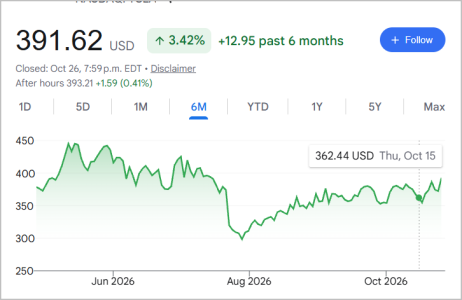
If you guys have not already encountered Common Sense Skeptic, good intro to their channel. Interesting reminder about the status of initial Roadster deposits & delivery prediction vs reality. The market yawned at the ~Oct-15 stunt. Watch enough of these videos and a certain, consistent trend starts to emerge. I've read most of the Musk books but I'm looking forward to the 4 hr movie.

1793062832115.png

 
Back
Top