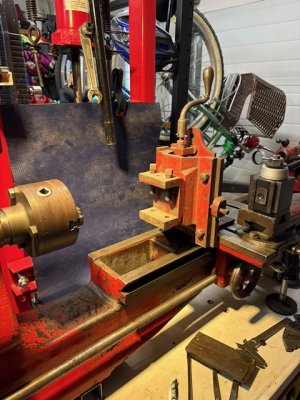

So my recently-acquired #5 Barnes lathe is now reassembled and installed on my smaller lathe bench. Not bad. Needs some more cleanup, and a few items are a bit sketchy, but overall well worth the $300 I paid.
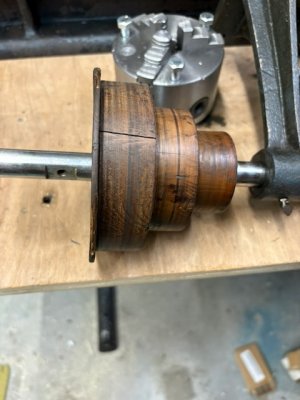
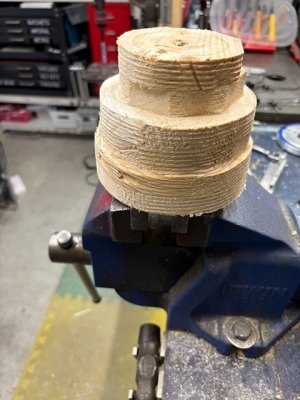
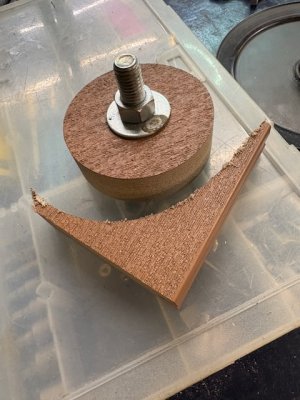
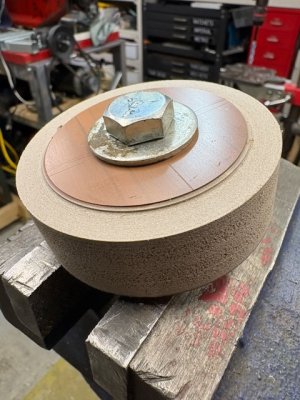
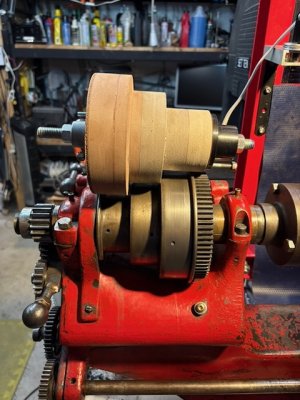
I need to make a counter shaft, 5-1/2" diameter three-step flat pulley about 6" long. After looking a the price of 6" diameter aluminum bar stock and the price of resin, I've decided that casting one using $200 in resin is out, and buying $700 worth of aluminum to throw away half of it as swarf is also not viable. Three chunks of nice tight-grain 2x6 lumber will do the trick, my #4-1/2 Barnes came from the factory with a wood counter shaft so obviously it works.
Video of chuck runout. No attempt to true up the chuck or match chuck jaws, this is as-is assembled without any effort put in to making everything nice and neat. Using a random chunk of scratched-up bar taken out of the scrap bin. Not bad for a century-old lathe that shows signs that it was dropped at some time.
I need to make a counter shaft, 5-1/2" diameter three-step flat pulley about 6" long. After looking a the price of 6" diameter aluminum bar stock and the price of resin, I've decided that casting one using $200 in resin is out, and buying $700 worth of aluminum to throw away half of it as swarf is also not viable. Three chunks of nice tight-grain 2x6 lumber will do the trick, my #4-1/2 Barnes came from the factory with a wood counter shaft so obviously it works.
Video of chuck runout. No attempt to true up the chuck or match chuck jaws, this is as-is assembled without any effort put in to making everything nice and neat. Using a random chunk of scratched-up bar taken out of the scrap bin. Not bad for a century-old lathe that shows signs that it was dropped at some time.
Last edited: